

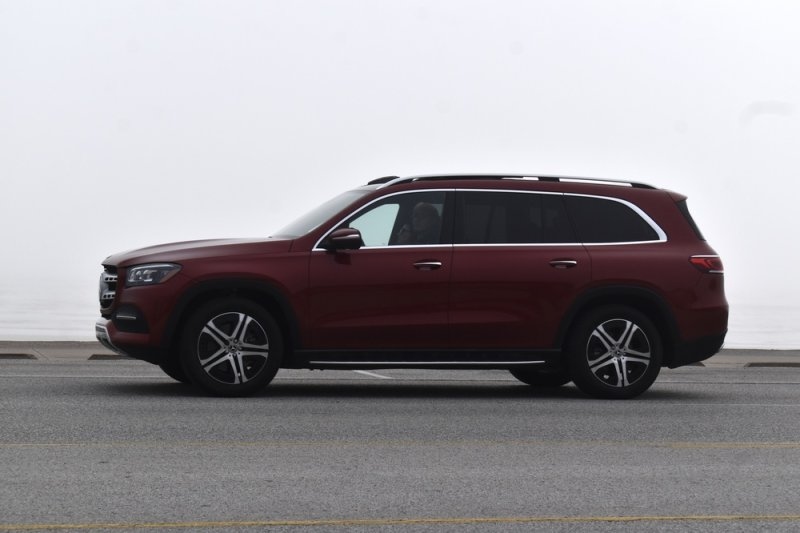
If you look at the midsize SUV market in the U.S., it’s packed with choices. That sounds overwhelming, but really, it just means you’ve got options. Need extra seats? Want to tow something? Care about saving gas, having the latest tech, or hitting the trails every weekend? There’s something for you. What works for one person is totally wrong for someone else. A growing family has different needs than someone hauling a trailer or driving solo to work.
This list cuts through the nonsense and highlights what really matters when you’re picking out a midsize SUV—stuff like flexibility, comfort, and real-life use, not just how many features the brochure lists. We’re going to compare 10 of the top models for American drivers and break down where each one shines.
The best midsize SUV is not automatically the largest or most expensive model. For this list, the evaluation looks at passenger usefulness, powertrain choices, cargo flexibility, towing, available AWD or 4WD, technology, and the kind of driver each vehicle suits best.
These midsize SUV reviews are therefore less about declaring one universal winner. The useful question is different: which SUV fits the way you actually drive?
The 2027 Kia Telluride is one of the most interesting new arrivals here. It offers seating for up to eight, a new turbocharged hybrid option producing 329 hp, plus an available X-Pro model with 9.1 inches of ground clearance. The gas model produces 274 hp and can tow up to 5,000 pounds.
For shoppers wanting one vehicle that handles school runs, road trips, and occasional rough roads, this could be the best midsize SUV to watch.
The 2026 Hyundai Santa Fe takes a boxier approach to family utility. Its 2.5-liter turbocharged four-cylinder produces 277 hp and 311 lb-ft of torque. Towing reaches 3,500 pounds on most configurations, while a terrain-focused version can reach 4,500 pounds.
It is among the top midsize SUVs for buyers who want useful interior space without moving into a much larger vehicle.
The redesigned 2026 Subaru Outback is a different kind of best midsize SUV choice. Standard Symmetrical AWD gives it a strong everyday advantage in snow-prone states, while ground clearance reaches 9.5 inches on the Wilderness. Maximum cargo volume is 80.5 cubic feet, with towing up to 3,500 pounds on higher-output versions.
For mountain towns and outdoor-heavy households, it is hard to ignore.
The 2026 Honda Passport skips the third row, which is actually a benefit for some buyers. Its 3.5-liter V6 makes 285 hp, while the available TrailSport setup adds all-terrain tires and an off-road-tuned suspension. Maximum towing is 5,000 pounds.
That makes the Passport a compelling best midsize SUV for families that do not need seven or eight seats.
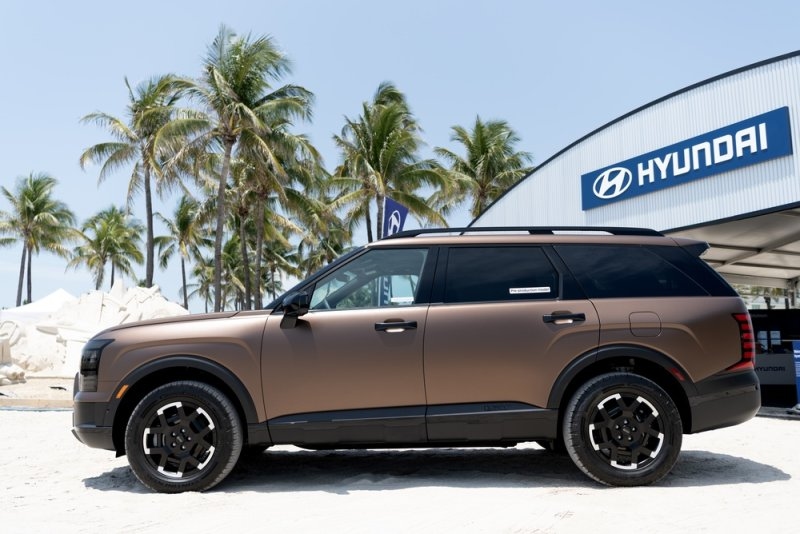
The 2026 Hyundai Palisade remains firmly aimed at families. It offers available HTRAC AWD across the lineup, standard AWD on the XRT, and 287 hp. Its focus is less about extreme trail driving and more about comfortable transportation for several passengers.
Among top midsize SUVs, the Palisade makes the most sense for buyers who put cabin comfort high on the list.
A useful midsize SUV comparison should show how these vehicles differ rather than pretending their priorities are identical.
| SUV | Seating | Standout Strength | Best Fit |
|---|---|---|---|
| 2027 Kia Telluride | Up to 8 | Hybrid and X-Pro capability | Large families |
| 2026 Hyundai Santa Fe | 5-7 | Space and value | Everyday family use |
| 2026 Subaru Outback | 5 | AWD and outdoor ability | Snow and adventure |
| 2026 Honda Passport | 5 | Trail capability and towing | Active couples/families |
| 2026 Hyundai Palisade | Up to 8 | Comfort | Family road trips |
| 2026 Jeep Grand Cherokee | 5 | Off-road and towing | Adventure buyers |
| 2026 Jeep Grand Cherokee L | Up to 7 | Three-row Jeep capability | Active families |
| 2026 Toyota Grand Highlander | Up to 8 | Hybrid efficiency and space | Large families |
| 2026 Ford Explorer | Up to 7 | Power and towing | Versatile households |
| 2026 Toyota Highlander | Up to 8 | Hybrid efficiency | Daily family driving |
The top midsize SUVs are no longer limited to soft-road duties. Several now offer serious towing or trail-oriented versions.
The 2026 Jeep Grand Cherokee gets a new 2.0-liter Hurricane 4 Turbo with 324 hp and 332 lb-ft of torque. Jeep lists maximum towing at 6,200 pounds, giving it a serious advantage for buyers hauling recreational equipment.
It is a strong, best midsize SUV candidate for drivers who want everyday comfort without giving up capability.
The Grand Cherokee L stretches the formula for families needing additional seating. It keeps the Jeep character but adds three rows, making it more useful for larger households.
For shoppers comparing top midsize SUVs, this is the choice when third-row access matters but traditional minivan styling does not.
The 2026 Ford Explorer offers seating for up to seven, available four-wheel drive, and up to 5,000 pounds of towing capacity. The new Tremor adds a more trail-focused option, while higher-output versions reach 385 hp.
It belongs in any serious midsize SUV reviews roundup because it covers commuting, family hauling, and towing unusually well.
Not every buyer needs maximum horsepower. Sometimes the best midsize SUV is simply the one that carries people comfortably while using less fuel.
The Grand Highlander is one of the strongest, best midsize SUV for families options because it combines three-row seating with several powertrains. Buyers can choose gas, hybrid, or Hybrid MAX. The hybrid reaches a manufacturer-estimated 34 mpg combined, while Hybrid MAX makes 362 hp. Cargo capacity reaches 97.5 cubic feet.
That combination makes it one of the most complete top midsize SUVs for large households.
The 2026 Toyota Highlander seats up to eight and offers gas or hybrid powertrains. The hybrid can reach an EPA-estimated 35 mpg combined, while the 2.4-liter turbo makes 265 hp and 310 lb-ft of torque.
For buyers wanting a proven family layout and strong fuel economy, it remains a sensible best midsize SUV contender.
Choosing the best midsize SUV for families comes down to how the vehicle will actually be used. Eight seats are useful if grandparents regularly come along. They are less useful if the third row spends most of its life folded down.
A family hauling sports gear may value cargo depth. Another may care more about hybrid fuel savings. Someone living in Colorado may put AWD above almost everything else.
That is why midsize SUV comparison shopping should start with needs, not badges.
The best midsize SUV for families could be the Grand Highlander for space, Telluride for versatility, Highlander for efficiency, or Passport for a smaller two-row setup.
Also Read: Tesla Roadster 2026 Full Price, Range, Specs and Top Speed
There’s no single “best” recipe for midsize SUVs anymore, and that’s a good thing. The Kia Telluride is great for big families, while the Honda Passport is better if you don’t need the third row but love adventure. The Subaru Outback leans into outdoor life, and the Toyota Grand Highlander gives you massive space. The Ford Explorer and Jeep Grand Cherokee are tough enough for towing. Toyota’s hybrids keep saving gas right at the center of things.
For most families, the big questions come down to simple stuff: how many seats you need, how much you pack in the back, how often you leave the pavement, and what kind of gas mileage you want. Figure those out first. Worry about trims and gadgets later. The smartest way to pick a midsize SUV is to think about your actual week, not just chasing the fanciest brochure.
Smaller two-row models, like the Honda Passport and Subaru Outback, feel a lot less clumsy in the city. If you’d rather parallel park without breaking a sweat than haul every kid in the neighborhood, give those a look.
If you’re hitting the highway for long trips, both the Toyota Highlander and Grand Highlander are stars when you want efficiency and comfort for everyone. Or, if towing and a bit more muscle matter, add the Ford Explorer to your list.
The 2026 Toyota Grand Highlander offers up to 97.5 cubic feet with the rear seats folded. That gives it a notable advantage for families carrying bulky luggage, sports equipment, or home-improvement supplies.
Not always. They’re pretty handy if you fold the back row down and use the extra space for stuff instead of people. But if you only need five seats, a two-row model may save you money and simplify your life.
Probably not. All-wheel drive helps with grip, but if you’re not dealing with snow or mud, front-wheel-drive SUVs usually do just fine. The real headline is: good tires and paying attention to the roads matter, no matter what you drive.
This content was created by AI