

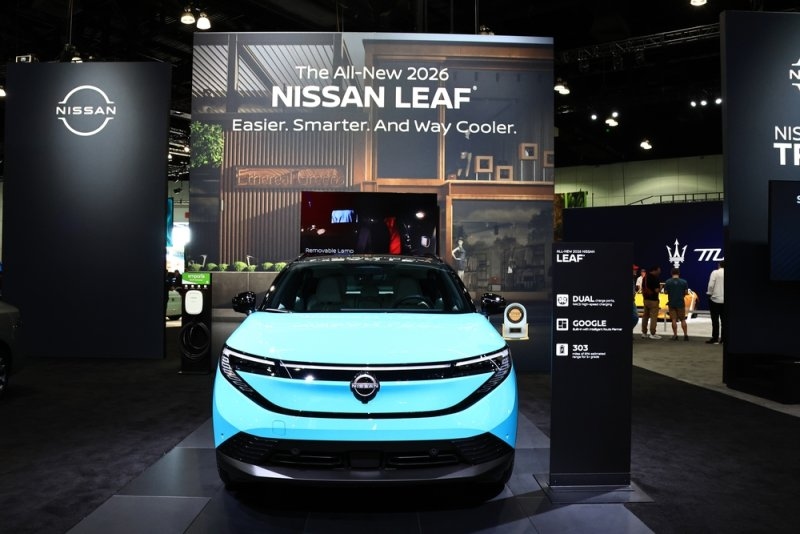
The Chevy Bolt vs. Nissan Leaf battle is heating up, and it's fiercer than ever. Compare prices on affordable electric cars, and you'll find they're moving along at a pace that exceeds most buyers' expectations. New studies on the auto industry reveal further evidence that demand for electric vehicles is on the rise. Manufacturers are pushing out better battery capacity, faster chargers, and more affordable vehicles that give consumers it all.
The refreshed 2027 Chevy Bolt and 2026 Nissan Leaf both prove that affordable EVs can have practical appeal. But their take on this segment is worlds apart. One is all about affordable driving fun, while the other is all about comfort. We'll compare and contrast their performance, technology, practicality, life, and pricing so you can determine which electric car has earned a spot in your driveway.
For many years, there haven't been many cheap EV options. Today, that is slowly changing.
Chevrolet and Nissan have given their city electrics a facelift—with more tech-savvy features, longer-lasting battery packs, and snazzier cabins. While they target similar customers, the cars are worlds apart in terms of the ride.
Not much has changed in the new Bolt, but it looks more refined and sharper. The tall profile, clean body lines, and compact design are very taxi-friendly.
The 2026 Nissan Leaf, on the other hand, adopts crossover styling. Features such as the sloping roof, contemporary headlamps, and aerodynamic styling contribute to a much more luxurious feel than before.
In terms of looks, the Leaf comes out on top, as it looks more futuristic. Someone who wants a more conventional hatchback, though, will probably go for the Bolt.
The car doesn't really matter. Neither model is a "performance car."
Now, the Bolt feels significantly lighter and more agile. It has quicker reactions, easier turning, more intuitive braking, and more confidence-inspiring corners. The Chevy engineers have really tried to make the car a pleasure to drive every single day.
The Leaf is a comfortable cruiser. Road noise is low, and the suspension handles uneven pavement more adeptly than most. At highway speeds, leisurely nature might appeal more than sporty reflexes. In the most recent comparison test, the Bolt outperformed the Leaf in actual driving feel.
Essential Reads: A Guide to Electric Car Comparison: Leaf Vs EX30 Vs Bolt
Range anxiety still plays a role in purchase choices.
With the 2026 Nissan Leaf, certain higher-range trims with an EPA-estimated range of about 303 miles are more than capable of driving much farther. When it comes to the 2027 Chevy Bolt, range is approximately 255 miles, which is still sufficient for the average car commuter.
Charging paints a different picture.
CoSupports, they both support Tesla's NACS Standard and can utilize Supercharger locations. They can go from 10 percent to 80 percent in about 26 minutes and 35 minutes, respectively, under ideal conditions on the bolt.
Inside, each has made significant improvements.
The Bolt has a neatly designed dashboard with Google Built-In, a usable configuration, and, luckily, more back-seat space than the car's size would suggest.
The Leaf adds more creature comforts, such as plush interior materials, larger available screens, and wireless Bluetooth connectivity for your smartphone. It also has more available cargo space behind the rear seats, so it better accommodates expanding families.
It is technology that differentiates.
Chevrolet still has one of the best hands-free driving systems with Super Cruise, while Nissan is maturing its ProPilot Assist.
Price is still the biggest advantage.
The Bolt is priced well below the Leaf, making it one of the cheapest new EVs on the market. Chevrolet has aimed to squeeze the best value out of the car without sacrificing critical components.
Compared to the Leaf, the NX offers a little more range and a more upscale interior at a higher price point. Which is a better value depends really on what the buyer values more: Range or interior quality.
If you are after an electric car that is fun, practical, and cheap, then pick the Bolt.
Its quicker charging, sure-footed handling, lower purchase price, and abundant rear seat room make it a very good daily driver. If most of your driving is in town and city streets, its small size and agility will be advantageous.
However, the Leaf would be the best choice for those looking for comfort and range.
The quieter cabin, better cargo capacity, higher-quality cabin materials, and increased range make for a less stressful ownership experience. For families that regularly travel long distances on the highway, those factors may be worth the extra cost.
When you compare the Chevy Bolt vs. Nissan Leaf, there's no outright winner or loser.
Both are huge steps forward in affordable EVs. The Leaf has the edge in range, cabin refinement, and family practicality. The Bolt wins on price, driving experience, rapid charging, and other significant value.
Overall, the 2027 Chevy Bolt has the advantage over many buyers looking for the best overall deal on a budget-friendly EV because it is more fun to drive and remains one of the most affordable models on the market. For those seeking the best driving range, the redesigned Nissan Leaf is the best choice.
Try This: Top 5 Electric Cars of 2025: Performance & Key Features
The newest Chevy Bolt vs. Nissan Leaf match-up is proof of how fierce the battle has become between cheaper EVs. Chevrolet makes the most of value, a lively driving experience, and rapid charging speeds. Nissan places more emphasis on comfort, a larger range, and high-quality interior materials. Which is best for you depends on the types of trips you take most often. Here we have made a direct electric vehicle comparison.
If you're shopping for your first electric vehicle or upgrading from an internal combustion-powered model, reading professional comparisons can offer useful advice. For more detailed reviews, ownership tips, and general automotive news, go to Carexcel.com. If you want a direct comparison and in-depth analysis, try platforms like search.com for the best verdict.
Electric vehicles have far fewer moving parts than conventional gasoline cars, so they can be maintained at a considerably lower cost than standard vehicles. Basic maintenance is limited to brake pad replacements, cabin air filter replacements, software upgrades, and tire rotations. Although the Bolt's lower purchase price may lower total ownership costs, maintenance costs should be comparable for both vehicles.
Both models will appeal to first-time EV owners, but the ideal fit will come down to individual driving patterns. The Bolt is a better "deal" and drives more easily, while the Leaf excels on range and refinement. In either case, you'll enjoy comprehensive, market-leading safety features.
Current EV batteries are designed to last. Typically, most EV manufacturers offer an 8-year/100,000-mile warranty. Even so, a vast majority of packs will last well beyond that mark. Careful, moderate driving, proper charging, and cool storage and use can preserve battery life/health.
This content was created by AI