


The affordable EV conversation is finally getting interesting again. For a while, buyers looking below premium money had to pick between the “good enough” range, aging tech, or a car that felt cheap in all the wrong ways. That is changing. Fast.
Now the shortlist looks a lot stronger. The redesigned Nissan Leaf is back as a small electric crossover with up to 303 miles of EPA-estimated range. The Volvo EX30 brings premium design and serious punch in a compact package, with up to 261 miles of EPA-estimated range in the U.S. And the next Bolt is coming in hot as Chevrolet’s most affordable EV, with a starting price under $30,000, 262 miles of EPA-estimated range, and faster charging than the old one.
A proper electric car comparison between these three has to start with one basic truth: they are aimed at slightly different buyers, even though they all sit in the compact EV space. The 2026 Nissan Leaf is trying to be the mainstream, no-drama choice. The EX30 leans premium and performance-heavy. The 2027 Chevy Bolt goes hard on affordability and simplicity.
That means there is no one universal winner here. The better question is this: what matters most to the buyer? Range? Price? Interior vibe? Charging speed? A little style without going broke? Fair question, honestly. Because all three do something well, but not in the exact same way.
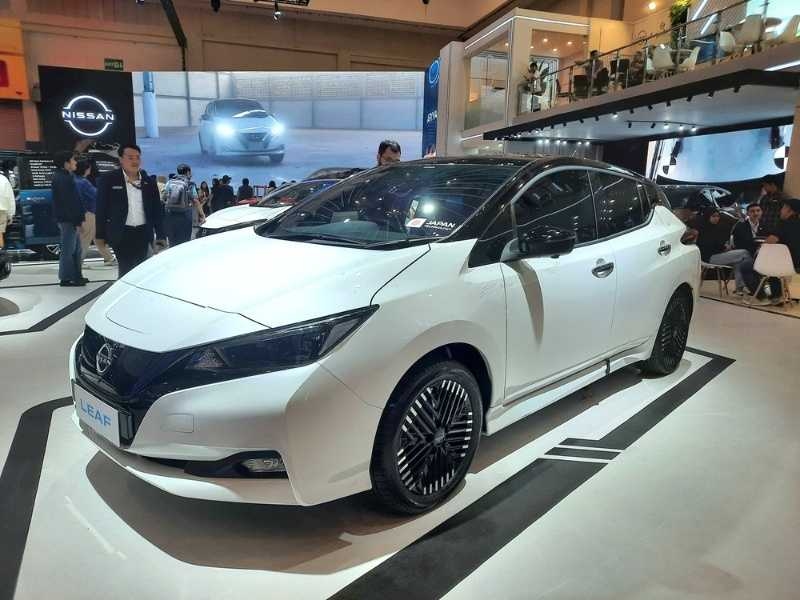
The old Leaf had loyal fans, but it also started feeling dated. Nissan clearly knows that. The new Leaf has shifted into subcompact crossover territory, and Nissan says it offers up to 303 miles of EPA-estimated range, a 75 kWh battery, liquid cooling, a passenger-side NACS port for DC fast charging, and a 10 to 80 percent fast-charge time of 35 minutes. Nissan also lists the starting MSRP at $29,990 for the S+ trim.
That combination gives the Leaf a pretty strong real-world case in the U.S. market. It has more range than the current EX30 and more official range than the new Bolt. It also now uses NACS for DC fast charging, which matters a lot in an EV comparison USA context because charging access is part of the buying decision now, not some side note.
The EX30 is the stylish disruptor here. Volvo’s U.S. site lists it as starting at $40,345 MSRP, and it offers up to 261 miles of EPA-estimated range in Single Motor Extended Range form and up to 253 miles for the Twin Motor Performance version. Volvo also lists the EX30 at 166.7 inches long, with a 104.3-inch wheelbase, and says Twin Motor Performance models make up to 422 horsepower.
That is where Volvo EX30 specs start looking very attractive for buyers who care less about raw value and more about design, tech feel, and quick acceleration. The EX30 is the smallest car here by length, but it is also the one most clearly pitched as a premium compact SUV rather than a pure budget EV. In other words, it is not trying to be cheap. It is trying to feel special.
Chevrolet has made the mission pretty obvious. The new Bolt is about affordability first. Chevy’s official site lists the new Bolt at a starting price of $27,600, while GM’s news release says the launch-model LT starts at $29,990 including destination and that a later lower-priced LT will start at $28,995 including destination. Chevrolet also says the new Bolt offers 262 miles of EPA-estimated range, 10 to 80 percent DC fast charging in about 25 minutes, and a standard NACS charge port.
So yes, the 2027 Chevy Bolt may end up being the value hero in this group. It is not the longest-range option, and it probably will not feel as premium as the Volvo, but if someone wants a modern EV for as little money as possible without dropping into compromise city, the Bolt suddenly looks very relevant again. That is a big deal in any shortlist of the best electric cars 2026 shoppers will be cross-shopping into early 2027.
On a Similar Note: Is the BYD Sealion 5 DM-i the Best Hybrid SUV in 2026?
If this comparison is mostly about range, the Leaf wins on the official numbers currently published. Nissan says the Leaf tops out at 303 miles, with lower trims or configurations ranging down to 259 miles. Volvo tops out at 261 miles in U.S. spec for the EX30 Single Motor Extended Range. Chevrolet lists the Bolt at 262 miles EPA-estimated.
Charging is a little more mixed. The Bolt’s official 10 to 80 percent time is about 25 minutes, while the Leaf is listed at 35 minutes for peak DC fast charging. Volvo’s official specification pages list 10 to 80 percent DC charging at 26.5 minutes for certain EX30 variants. So the Leaf leads on range, but the Bolt and EX30 look quicker on DC charging stops.
That matters because a good electric car comparison cannot just stop at miles. A car with slightly less range but quicker charging may still fit some drivers better, especially for mixed city and regional use.
This is where the field really splits.
The Leaf starts at $29,990 and stretches to 303 miles. That is a strong value equation. The Bolt undercuts it on base price and still gives 262 miles, which is impressive if price is the main driver. The EX30 starts much higher, so it has to justify itself on feel, performance, and premium appeal rather than raw affordability.
For buyers focused on the best electric cars 2026, the real fight is probably Leaf versus Bolt, not Leaf versus Volvo. The Leaf looks like the smarter “do everything reasonably well” option. The Bolt looks like the cheaper “just get me a solid EV” choice. The Volvo is more of a taste-driven buy. Not irrational. Just different.
The 2026 Nissan Leaf makes the most sense for buyers who want a familiar brand, strong range, crossover shape, and charging access that now feels much more current thanks to NACS. It is probably the easiest one here to recommend to the broad middle of the market.
The EX30 works best for buyers who care about premium design, compact dimensions, and performance. The official Volvo EX30 specs back that up, especially the 422-hp Twin Motor Performance version. This is the EV for someone who wants small and upscale, not merely affordable.
The 2027 Chevy Bolt is the practical pick for shoppers who want to spend less, keep charging simple with NACS, and still get a competitive 262 miles of range. In an EV comparison USA context, that affordability angle is going to matter a lot. The U.S. market still responds when the monthly payment looks sane.
Read More: 2026 Audi Q3 vs Buick Envision Comparison for Luxury Drivers
If someone wants the best all-around blend of range, price, and modern charging, the Leaf probably has the strongest case right now. If they want the nicest cabin feel and the most premium energy, the EX30 is the clear standout. If they want the cheapest route into a credible new EV, the Bolt looks tough to ignore.
So the winner depends on the buyer. Boring answer, maybe. Also the correct one. The Leaf feels like the safest recommendation. The EX30 feels like the most desirable. The Bolt feels like the smartest money move. That is actually a pretty healthy place for the compact EV market to be.
It has clearly moved toward small crossover territory. Nissan’s own U.S. page calls the all-new Leaf a “subcompact SUV,” and the redesign is aimed at buyers who want a higher-riding shape than the older Leaf hatchback offered. That shift matters because crossovers generally sell better in the U.S. and often feel more practical to mainstream buyers.
Because Volvo is positioning it differently. The EX30 is being sold as a compact premium EV, not a pure affordability play. Its official pricing starts higher, and Volvo leans into upscale design, stronger performance variants, and brand positioning that sits above Chevrolet and usually above Nissan too. Buyers are paying for the premium experience as much as the battery.
That depends on priorities. If price is everything, waiting for the Bolt could make sense because Chevrolet is pushing it as its most affordable EV with a sub-$30,000 entry point. But buyers who want more range right now may find the Leaf stronger on paper, and buyers who want a premium compact EV can already look at the EX30. Timing, budget, and taste all matter here.
This content was created by AI