

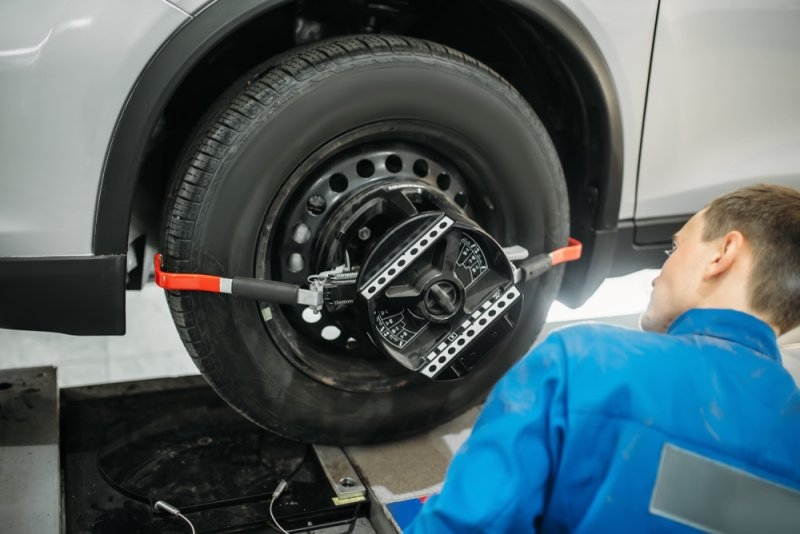
Rotation and balancing of tires might not seem like pressing tasks when the car is running as usual. However, if ignored, the maintenance tasks will stealthily result in unbalanced tire wear, poor gas mileage, excessive repair costs, and even safety problems. The U.S. Department of Energy says that improper tire care could lead to a significant reduction in gas mileage and tire life.
Most drivers put off tire care to save cash, but this decision ironically makes it much more expensive down the road. Replacing a tire may cost you hundreds of dollars, but the preventive care services of balancing and rotating the tires are quite inexpensive.
In this guide, you'll find everything you need to know about tire rotation and balancing, and their importance.
Tire rotation and balancing are distinct but interconnected maintenance procedures that enhance tire life and performance.
Tire rotation: It's about shifting the position of your vehicle's tires.
Tire balancing: Ensuring the weight of the tire and wheel assembly is uniformly distributed around its rotational axis.
All four tires are not under the same pressure because they are in different positions. For example, front tires are generally more subject to friction, especially while turning and braking. Rotation helps to spread wear evenly over all four tires.
Balancing the tires is about placing tiny wheel weights in just the right places to ensure the weight is evenly distributed around the wheel. This should lower vibrations, improve comfort, and help prevent tires and other parts from wearing out.
Tire rotation and balancing bring more than just better tire tread. They promote safe, efficient, and smooth vehicle operation.
Worn tires are the biggest culprit in causing premature tire replacement. Evenly distributed wear achieved through rotation allows you to maximize your tire investment.
A worn tire with less tread is unable to provide adequate grip on the road, increasing the risk of accidents. Properly maintained tires provide reliable handling.
Uneven tire wear is the primary cause of increased rolling resistance, which makes the engine work harder to accelerate. Properly maintained tires can improve long-term fuel economy.
If you fail to balance your tires, you'll have more stress and vibration on the steering system, wheel bearings, and other suspension components, hence reducing their lifespan.
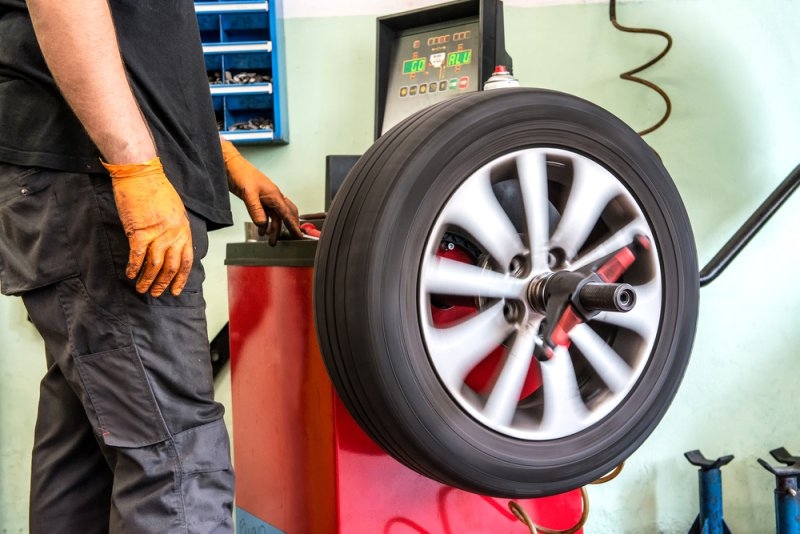
Generally, it is recommended to rotate tires every 5,000-8,000 miles. The period depends on how you drive, the type of tires used, and the vehicle's design. The best option is to consult your owner's manual or combine the rotation service with oil changes. Tire inspection can also tell you when rotation is needed before significant wear occurs.
Tires always show a sign or two when it's time for them to be rotated:
When a tire wears out more on one side compared to the other, it's a clear indication that it needs rotation.
If you notice your car pulling in a particular direction while driving, it may be due to unbalanced tires. You'll need a mechanic's check-up to determine whether it needs rotation or alignment.
Worn tires are also the culprit behind unusual humming sounds. The rotation may help resolve such issues.
Vibrations in the steering wheel often occur at a certain speed. This is a clear indication of unbalanced tires.
Many people mistake tire rotation and alignment because both impact tire wear. Wheel alignment keeps your wheels straight, while tire rotation helps keep tire wear equal. Tire rotation and balancing are often needed together with alignment. If your car pulls in one direction while driving straight, you'll probably need wheel alignment as well as balancing and rotation.
Tire balancing generally ranges from $15 to $50, depending on your vehicle type and region. Although this may seem like an added cost, a new set of tires can cost $600-$1,500+. Balancing is a relatively inexpensive way to significantly improve your car's lifespan and protect its steering and suspension system from additional wear.
Though balancing requires special equipment and expertise, tire rotation is a simple task that some vehicle owners choose to do themselves.
Different cars require different rotation patterns, so always check the owner's manual.
Adjust the tire pressure for all tires after rotation.
As you rotate your car's tires, you can also inspect them for potential wear and damage.
Place your jack stands before you work on your tires, and do not get in your vehicle while it is jacked up.
Try This: All Weather Tires vs All Season Tires: Which One To Choose?
If you want to save a little money today, you'll pay much more in the long run. Unbalanced and worn tires not only reduce tire and suspension lifespan but also increase fuel consumption. In rare cases, an extremely worn tire can lead to a blowout.
Tire rotation and balancing are among the least expensive but the most critical car maintenance practices. They contribute to longer tire life, improved fuel efficiency, safer driving, and the protection of suspension components. If you follow a tire rotation schedule, pay attention to the signs your tires give, and consult a mechanic for tire balancing when needed, you can significantly improve your vehicle's longevity and performance.
Even new tires require proper rotation according to the manufacturer's recommended schedule. When you start driving the new car, the wear process will begin from the start. Thus, tire rotation in the first year ensures balanced wear and maximizes overall lifespan.
Manufacturers may require proof of tire rotation for tire tread wear warranty claims to be valid, which is why failing to rotate the tires may invalidate the claim if there is an unbalanced wear pattern or premature tread wear.
The condition of the road and driving patterns can affect tire behavior; therefore, impacts such as hitting potholes, snow, or ice on the road may cause a tire to become unbalanced. Hence, the tire condition and balance should be inspected accordingly, which will surely help you out.
This content was created by AI